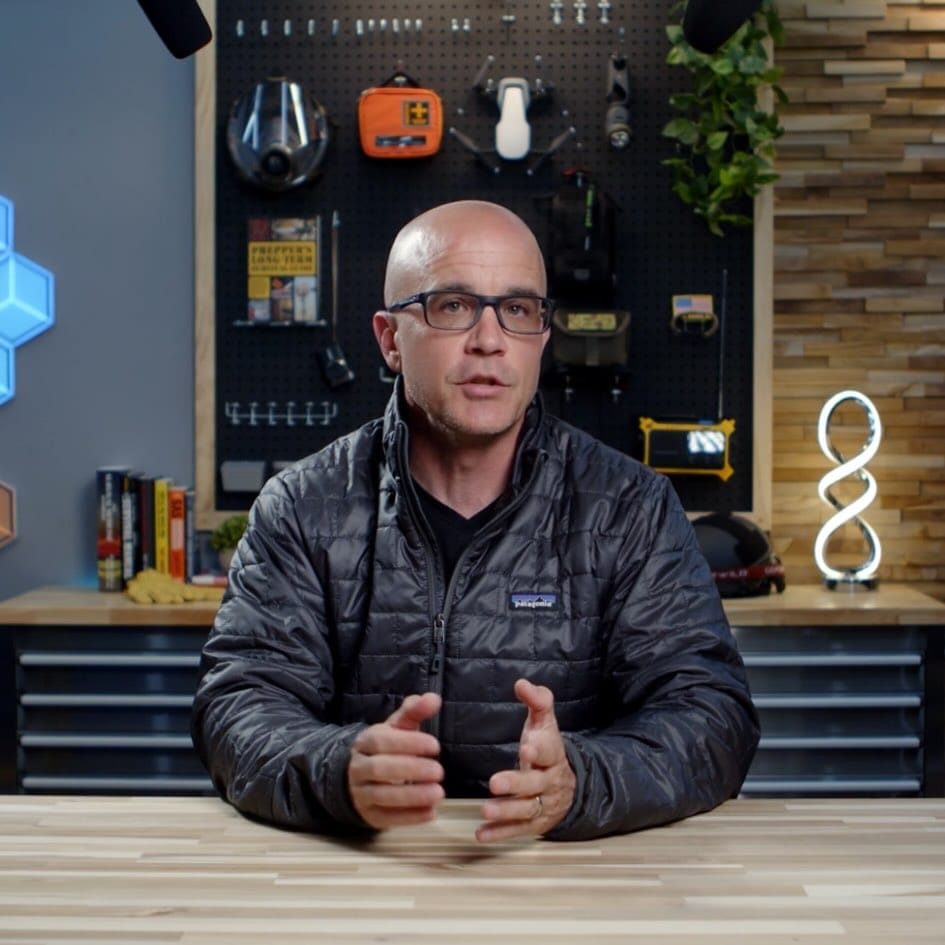
Turn Your Suburban Backyard Into a Real Food, Water, and Energy System
Build real food, water, and energy capability so your household keeps working when outside systems become less reliable.

Quit Delaying
~
Avoid Mistakes
~
Build Your Independence Now
The Systems You Depend On Are Already Strained. What Happens When You Can’t Count On Them?
Maybe you’ve thought about growing your own food, capturing your own water, or generating your own power. But trying to figure all of that out on your own can feel overwhelming.
Meanwhile, prices keep rising, systems keep straining, and disruptions are lasting longer. Most people assume they’ll have time to react. But when pressure hits, it usually comes faster than expected. And the longer you wait, the more exposed your household becomes.
Like you, I wanted to protect my family without uprooting our lives.
Several years ago, I was your average suburban dad, busy with work and family and uneasy about depending entirely on outside systems.
I started small with emergency kits, food storage, and survival essentials. It felt productive, but eventually I realized those were short-term buffers for long-term problems.
I wanted a way to produce food, secure water, and build energy resilience at home, not just stockpile supplies. But trying to piece it all together was frustrating. Conflicting advice, costly mistakes, and scattered projects left me overwhelmed and unsure what to build first.
After years of trial and error, I found solutions that actually worked in a suburban backyard. That’s when it clicked. I didn’t need more supplies. I needed systems.
You don’t need acres of land or endless resources. You need a clear, realistic sequence you can actually follow right where you live.
You don’t need more land. You need the right sequence.
A System That Actually Works in a Normal Suburban Backyard
At first, I believed real self-reliance required acres of land far from the city.
But moving out was not realistic. And most of the advice I found did not apply to normal suburban life.
The real problem was not space. It was a lack of clear, practical systems that actually fit the space I had.
Then I discovered the truth.
You can build real resilience right where you live.
In fact, less than half of a typical suburban yard, around 3,000 square feet, can produce meaningful food, capture water, and support a more resilient household.
With the right sequence and clear, step-by-step guidance, you can turn your yard into a working system without guesswork or wasted effort.
That is exactly what this course is designed to show you.


The step-by-step course for building real food, water, and energy systems in the space you already have.
Most people wait until systems start failing before they realize how dependent they really are. But real resilience is not about fear. It is about building practical capability before you are forced to.
Imagine stepping outside to food growing in your yard, knowing you have water stored and systems in place that make your household less dependent on strained supply chains.
This course gives you a clear, step-by-step roadmap for building real capability at home without guesswork, wasted effort, or needing a large rural property.
Real security comes from building practical systems early, right where you live.
With the right roadmap and guidance, you will know where to start, what to build next, and how to create long-term resilience over time.
We’ll help you build your roadmap to real household resilience

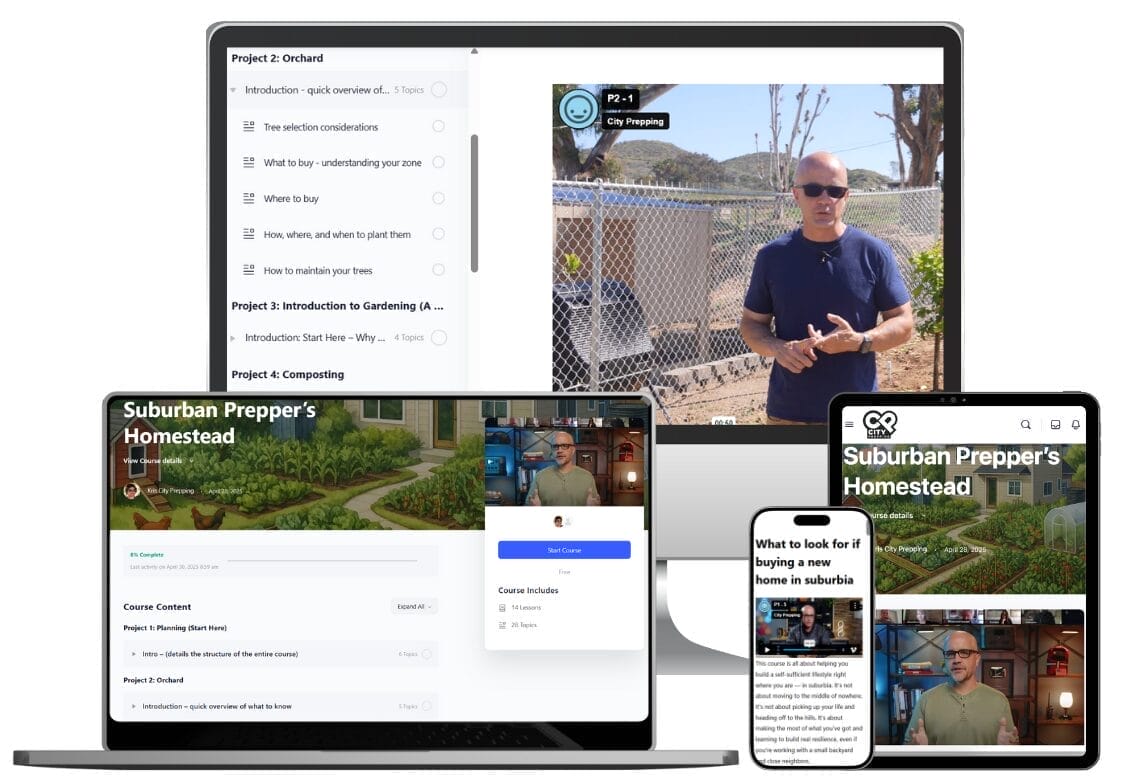
Many people ask, “Where do I start? What should I build first?” Most people are not struggling because they lack motivation. They are struggling because they lack a clear sequence.
That is exactly what this course provides: a practical, step-by-step roadmap you can follow at your own pace and within your own budget.
Instead of piecing together scattered videos and random projects, you will know what to focus on first, what to expand next, and how to build systems that work together over time.
- Location-specific planning tailored to your climate, space, and neighborhood
- Step-by-step structure with options that fit your pace and budget
- Clear priorities so you know what to build first in food, water, preservation, and energy
- Three practical phases that help you start small, expand what works, and build long-term resilience
- In-depth, organized video training covering food production, water systems, preservation, energy, planning, and more
Wherever You Are in the Process, You Can Build Real Capability Right Where You Live
If you are just getting started
This course gives you a clear place to begin with practical systems for food, water, preservation, and energy so you can build confidence without overwhelm.
If you have started but feel scattered
This course helps you connect the dots, build in the right order, and turn disconnected projects into a system that actually works together.
If you are ready to go further
This course helps you strengthen what you have already built, scale it more intentionally, and create the kind of long-term household resilience most people never reach.
This is not about doing everything at once. It is about building practical systems in the right sequence so your household becomes stronger over time.
See What's Inside
Phase 1: Foundations
Establish the essential systems that set the foundation for long-term self-sufficiency.
In this phase, you’ll map your space, start growing food, build healthy soil, and learn simple preservation methods so you can create early wins, avoid wasted effort, and build a setup that becomes more valuable over time.
Phase 1 Value: $500
Project 1: Planning & Layout
Assess your space, map out your setup, and lay the groundwork for your vision.
Project 2: Planting an Orchard
Get fruit trees started now—they take time to grow. Learn which varieties work best for your climate and how to care for them.
Project 3: Composting
for Healthy Soil
Reduce waste and create nutrient-rich soil for your garden. Simple composting methods that are better than store-bought options.
Project 4: Gardening Basics
Get started today by growing your food with buckets. Learn lighting, soil, and placement techniques.
Project 5: Food Preservation
& Storage
Keep food fresh longer with freezing, dehydrating, and shelf-stable storage techniques. Reduce waste and cut your grocery bill.
Phase 2: Expansion
Expand your self-sufficiency by strengthening your home’s ability to withstand disruptions.
In this phase, you’ll strengthen your food, water, and energy systems, scale what is already working, and put practical resilience measures in place so your household is better prepared for long-term disruptions.
Phase 2 Value: $500
Project 6: Preparing for the Unknown
Disaster-proof your home with emergency checklists, bug-out bag essentials, and practical survival strategies.
Project 7: Outdoor Gardening & Pest Control
Plan, plant, and maintain a thriving garden. Learn irrigation, fertilization, and natural pest control techniques.
Project 8: Rainwater Harvesting
Collect and store rainwater for gardening and backup use. Step-by-step setup for efficient water conservation.
Project 9: Advanced Food Preservation
Master canning, fermentation, and long-term food storage techniques to keep food safe and fresh.
Project 10: Renewable Energy - Solar Basics
Understand power consumption and set up a basic solar system. Learn whether DIY or buying a solar generator is right for you.
Phase 3: Independence
Take full control of your food, energy, and long-term sustainability.
In this phase, you’ll expand food production with livestock and advanced indoor growing, strengthen your long-term preservation skills, and explore whole-home renewable energy so your household becomes more capable, stable, and resilient over time.
Phase 2 Value: $400
Project 11: Raising Chickens for Eggs
Everything you need to know about keeping chickens—coops, feeding, egg production, and legal considerations.
Project 12: Expanding Indoor Gardening
Grow even more food indoors with hydroponics, aeroponics, and vertical grow towers.
Project 13: Advanced Food Preservation & Storage
Freeze-drying, pantry organization and the best methods for long-term food storage.
Project 14: Whole Home Renewable Energy
Is a full solar setup right for you? Learn how to evaluate your power needs and make an informed investment.
Plus Bonus Resources to Help You Stay Organized
- Family Emergency Binder with 30+ printable pages
- An accompanying course to help you set it up and use it
- Emergency plans, contacts, checklists, and critical documents in one place
Value: $99
This Course Is For You If…
- You’re ready to begin now, even if small, building real capability gradually and affordably without massive upfront costs.
- You prefer clear, visual, step-by-step guidance, even if you’ve never grown a single vegetable or completed a DIY project before.
- You have limited free time and resources and need realistic solutions you can implement steadily over months or years, not overnight.
- You want greater peace of mind and long-term stability, knowing your home is becoming more resilient and your family less dependent on strained systems.
- You value learning practical skills that will serve you long term, like efficient gardening, water collection, and safe food storage, all skills that take time to build and will serve you far into the future.
- You see the value in building resilience before it becomes an urgent necessity, not after outside systems force your hand.
This Course Is NOT For You If…
- You’re looking for quick fixes or overnight results. Real resilience takes steady effort over time. This course is about practical, sustainable progress, not instant solutions.
- You’re unwilling or unable to put in physical effort or prefer not to engage in hands-on tasks, gardening, or practical home projects, even simple ones.
- You’re not ready to make a financial investment in your long-term resilience. While the course emphasizes affordable and scalable projects, building real capability does require investing in tools, resources, and your education.
- Your primary focus is short-term disaster preparedness only. This course emphasizes practical, long-term household resilience, not just emergency supplies or short-term prepping.
- You want to rely solely on free resources like DIY videos or blogs. This course is for people who want a clear sequence and a real plan, not those still deciding whether to start.
The sooner you start, the more prepared and capable you’ll be when it matters most.
You could spend months, or even years, watching DIY videos, reading books, and sorting through conflicting advice, only to end up overwhelmed, unsure where to start, and constantly second-guessing whether you’re building the right systems in the right order.
DIY videos can teach useful skills, but they’re scattered, lack structure, and are not built to work as one connected system. There’s no clear roadmap tying together food production, water collection, preservation, and energy.
Books can teach valuable concepts, but they rarely provide enough practical guidance to help you adapt those ideas to your property, your budget, and your specific environment.
You might have watched various homesteading or prepper videos online, but when it comes to applying them in your own backyard, you’re still left wondering what actually works for your space, your climate, and your household.
Instead of making steady progress, you end up jumping from project to project with no clear sequence and no real strategy for building long-term resilience.
That is exactly why Suburban Prepper’s Homestead exists: to show you real progress in action and give you a practical roadmap you can follow right where you live.
This course cuts through ALL the noise, guesswork, and scattered advice
Giving you a complete, step-by-step roadmap to build real household resilience without
- wasted time,
- costly mistakes, or
- the frustration of trying to piece it all together on your own
Instead of just giving you information, we’ll show you what to build first, what to expand next, and how to scale your systems over time with focused projects you can work on one by one.
And when you start now, you gain practical skills before you actually need them, instead of trying to figure it all out later when systems are already under pressure.
30 DAY MONEY BACK
“PEACE OF MIND” GUARANTEE

What People Are Saying
Hey, I’m Kris!
I’ve been involved with emergency preparedness for nearly 30 years, including humanitarian work in impoverished areas of Mexico and Afghanistan.
From all this exposure I knew how good I had it and also how quickly things can change so I embarked upon a multiyear journey to create my own preparedness plan so I could feel confident taking care of myself and my family here in Southern California.
Over the last several years I’ve been blessed to have more than 1m subscribers on YouTube, and have helped over 3000 students learn more about self-reliance.
This has given me a unique view into how challenging it can be to prepare during these uncertain times.
I created The City Prepping Community to foster a tight-knit community of people that are inspired to become more self-sufficient, safe and secure.
Our goal is to help 10,000 people get prepared by 2030. We call it the 2030 Initiative and would love to have you join us in our mission.
186M Views
Frequently Asked Questions
1. My HOA or city has strict regulations about solar panels, chickens, or homesteading projects. Can I still benefit from this course?
Absolutely. The course offers multiple project options and adaptable strategies specifically designed for suburban areas, so you can choose what fits your local guidelines. Even if you can’t raise chickens or install large solar arrays, you’ll find plenty of alternatives that build self-sufficiency within your limits.
2. What if my local climate or conditions aren't ideal for gardening or certain projects?
This course teaches flexible gardening methods and multiple approaches that can adapt to various climates and conditions. You’ll learn exactly how to adjust your gardening, water collection, and energy projects to suit your local environment.
3. I’d love to take this course, but my family or spouse isn’t fully on board. What can I do?
It’s common for families to have mixed enthusiasm initially. The course is structured to let you start small, demonstrate quick wins, and gradually build support and excitement. You’ll be able to clearly show your family the benefits at each step—making it easier to gain their buy-in.
4. How is this course different from your other offers, like the Preppers Roadmap or City Prepping Community?
Great question! The Preppers Roadmap covers foundational prepping skills and essentials, while the City Prepping Community focuses on ongoing motivation, advanced prepping skills, and connecting with others. Suburban Backyard Homestead is specifically designed as the next-level course that shows you exactly how to transform your suburban property into a truly self-sufficient homestead, step-by-step, beyond basic prepping.
5. Couldn't I just learn all this from your free YouTube videos or other DIY sources online?
While you’ll find valuable content online (including our own videos!), the difference is that this course provides a structured, clear roadmap with step-by-step projects organized in a logical order. You’ll avoid scattered advice and the frustration of trying to piece random content together yourself. You’ll have clear priorities, checklists, and a systematic path forward.
6. How much ongoing support is provided if I get stuck or have questions during the course?
The course includes detailed, practical instructional videos, downloadable project checklists, troubleshooting guides, and links to helpful resources. While direct personalized coaching isn’t provided, we’ve made every effort to clearly answer common questions within the course content itself, so you’ll never feel lost about your next steps. Our contact information is in the course, and our tech team is constantly monitoring the site to ensure uptime.
7. Will this require a huge investment upfront?
No. One of the biggest advantages of this course is that it helps you start small and build in the right order. You do not need to spend a lot upfront or overhaul your property all at once. The projects begin with practical, affordable steps and then scale over time as your skills, budget, and systems grow. As you build, many of those investments can begin paying you back through lower grocery costs, better food security, and reduced dependence on outside systems.
8. What if I have physical limitations or health issues—will I still be able to complete this course?
Yes, absolutely. The projects in the course vary widely in intensity and can easily be adjusted or scaled down to match your physical ability or comfort level. You’ll find low-impact gardening methods, accessible preservation projects, and simple solutions that you can implement without heavy lifting or strenuous activity.
9. How quickly can I realistically start seeing results?
You’ll see your first results very soon. Many Phase 1 projects deliver tangible results within weeks, such as your first harvest or reduced grocery costs. Other projects, like fruit trees or solar power, take longer but offer significant long-term benefits. The course is designed to help you make continuous, steady progress so you stay motivated and know exactly what to focus on next.
10. When will I get access to all the materials?
When you enroll, you get immediate access to the full course, including all 14 projects across all 3 phases, so you can move at your own pace and start wherever makes the most sense for your property and budget. You’ll also receive the Family Emergency Binder and its accompanying course, which means you’re effectively getting two courses in one. Instead of waiting for content to unlock over time, you can begin building real progress right away with the full roadmap in front of you.
Here’s what you get when you enroll:
- Phase 1 – Foundations: 5 guided projects to help you plan your space, start growing food, build healthy soil, and begin with simple preservation (Course Value $500)
- Phase 2 – Expansion: 5 guided projects to help you expand food production, strengthen water systems, and build practical energy capability (Course Value $500)
- Phase 3 – Independence: 4 guided projects to help you scale your systems, improve long-term preservation, and build greater household stability over time (Course Value $400)
- Family Emergency Binder Bonus: Printable planning pages, checklists, and critical documents in one place, plus its accompanying course (Bonus Value $99)