
Build Capability Where You Live.
Suburban Homes Were Built to Consume.
You Can Change That.
Watch the video above to see how you can immediately take your preparedness to the next level.
Turn your apartment balcony, small backyard, or suburban lot into a layered system for food, water, and energy.
Prices may continue rising. Outages may stretch longer. Systems may thin.
You cannot control those trends, but you can absolutely control what your property is capable of doing.
If you are ready to move from scattered upgrades to structured capability, this is where that shift begins. Not someday. This season.
12.5+ hours of structured video training
~
14 real-world implementation projects
~
3 scalable build phases
From the Home of
Kris a.k.a. City Prepping
Prices are rising. Outages are lasting longer. Systems feel thinner than they used to.
That is not panic. It is pressure. And pressure exposes dependency.
Most families assume they will figure this out later. When prices climb higher. When instability feels obvious. When they “have more time.” But capability does not appear on demand.
Food does not grow because you suddenly need it. Rain systems do not install themselves during restrictions. Energy literacy does not develop in the middle of a blackout. Preservation skills do not form the week shelves go empty.
Capability compounds slowly.
And every season you delay, dependency deepens.
This is not just about gardening. It is about whether your property produces or only consumes.
Can it generate calories? Capture and replenish water? Reduce grid reliance? Preserve surplus? Continue functioning when deliveries pause?
Most suburban households are not short on motivation. They are short on structure.
They have storage but no production. Solar quotes but no literacy. Rain barrels but no integration. Supplies but no system.
That is not a motivation problem.
It is a sequencing problem.
And sequence determines whether your home remains exposed or becomes capable.
Prices rise. Outages lengthen. Systems thin. You don’t need panic. You need capability.
The Suburban Wake-Up
I had the job, the mortgage, the kids, and the responsibilities that most suburban families carry.
I was already prepping before COVID, and that season confirmed something I felt in my gut for years: systems break slowly, and they recover even slower.
Like most people, I started with kits and bins. Backup supplies. Extra food. Extra gear. It helped.
But I was still completely exposed.
If grocery prices doubled, I was vulnerable. If water restrictions tightened, I was stuck. If the grid went down for more than a few days, I was in trouble.
Supplies create a buffer. Systems create endurance.
After years of trial and error in my own suburban backyard, I realized something simple but powerful:
You do not need acres.
You need sequence.

Like you, I wanted to protect my family without uprooting our lives.
I was a suburban dad with a job, a mortgage, and responsibilities. But I could feel the pressure building. I was prepping before COVID, but that really showed me that my instincts were right. Things can get horribly bad, and they’re slower to ever restore. Prices were rising. Outages were lasting longer. Systems felt thinner than they used to. Everything seemed just stable enough to ignore and hope, but unstable enough to worry about. I knew “hope” wasn’t a strategy.
So I started where most people start. Emergency kits. Food storage. Backup supplies. It helped, but it did not solve the deeper problem.
I was still completely dependent.
If grocery prices doubled, I was exposed. If water restrictions tightened, I was exposed. If the grid went down for more than a few days, I was exposed. Stored supplies are a buffer. They are not a system.

That realization changed everything.
I did not need more bins. I needed capability. Food production, not just storage. Water control, not just reserves. Energy understanding, not just flashlights.
But trying to piece it together from scattered advice was frustrating. Conflicting information. Costly mistakes. Projects that did not connect. It was not a motivation problem.
It was a systems problem.
After years of trial and error in my own suburban backyard, I discovered something practical. You do not need acres. You need a sequence. You need projects that scale. You need a clear, realistic plan you can follow right where you already live.
You do not need acres.
You need a sequence.
You need projects that scale.
Top 3 Costly Mistakes
The 3 Mistakes That Keep Properties Dependent
That Keep Your Property Fully Dependent
Most people are not lazy. They are building in the wrong order.

Mistake #1
Starting with Storage Instead of Production
Stocking shelves feels productive. It is visible. It is immediate.
But storage runs out.
If your property does not produce calories, water efficiency, or energy clarity, you are still fully dependent. You have extended your timeline, but you have not changed your position.
Stored supplies are a buffer. They are not a system.
Stocking shelves feels productive because it is visible and immediate. But shelves empty. Production changes your position permanently.
Mistake #2
Building Random Projects Instead of Layered Systems
What keeps most people from moving forward is not knowing where to begin.
A rain barrel here. A raised bed there. A solar quote sitting in your inbox.
None of those are wrong.
But when projects do not connect, they do not scale. I needed to start where I was at, and not try to build what my home could not support. If I didn’t have room for a garden, I needed to know how to grow indoors in containers. If I couldn’t afford a whole-home solar system, I needed good backups and smaller solar systems to replenish. I needed to scale up or down depending upon where I lived.
Compost should support soil if I had some land. No soil and no space, indoor set-it-and-forget-it gardening would work. Soil should support production, but of what? Rain capture should support irrigation or drinking supply. Food preservation should support stored foods. Energy decisions should support resilience and grid-independence.
Without scalable sequences, you’re spinning your wheels and creating only expenses. With sequence, you create personal independence and your own infrastructure.
A rain barrel here. A garden bed there. A solar quote sitting in your inbox.
None of those are wrong. But when they do not connect, they do not scale. And when they do not scale, they do not change your long-term dependency.

Mistake #3
Waiting for a Clear Signal to Start
Most suburban families delay or pray.
They tell themselves they will begin when prices rise further. When instability feels obvious. When they have more time.
The hope things go back to the way they were, even as things get worse, the shocks keep coming, prices keep climbing, and outages last longer.
Just as we’re seeing systems fail gradually, more and more each year, systems we build mature slowly, but you have to start now.
Learning to grow food takes time.
Soil and methods improve over seasons.
Food production and utilization have to be strategic.
Water efficiency improves through iteration.
Energy literacy develops with practice.
Seasons pass quietly. Trees do not mature on demand. Skills do not appear the week shelves go bare.
Capability compounds only when you start before pressure forces you to.
Every year you wait, you remain dependent longer.
The pressure rarely arrives with warning.
It arrives when you wish you had started sooner.
A Structured Way to Build Capability
You do not solve a systems problem by buying more supplies.
You solve it with sequence.
The turning point for me was simple. I stopped asking, “What should I buy next?” and started asking, “What supports everything else?”
That shift changed everything.
Instead of chasing random projects, I began building layers. Instead of reacting to headlines, I focused on capability that would mature over time. Each decision supported the next. Nothing stood alone.
That framework became Suburban Prepper’s Homestead.
This is not a gardening class.
It is not a theory course.
It does not require acreage.
It is a scalable build order designed for real life.
An apartment balcony.
A small suburban yard.
A standard lot.
Built From Real Constraints
This program was not created in a studio.
It was built in my own suburban backyard.
Limited space.
Municipal rules.
Real budgets.
Real-time constraints.
I made the same mistakes most people make.
Built in the wrong order.
Underestimated timelines.
Installed systems that did not scale.
Through years of trial and refinement, I discovered something simple:
Sequence matters more than ambition.
Layered systems outperform scattered upgrades.
Scalability beats perfection.
Suburban Prepper’s Homestead is the distilled result of that process.
Tested.
Refined.
Structured.
The 3 Capability Phases
The course is divided into 3 phases.
Phase One:
Establish Control
Resilience begins with understanding what you already have. In this phase, you assess your property and identify the leverage points that allow you to start installing practical systems. That might mean a small food system, water storage, improved operational security, or evaluating your household’s real power needs.
Whether you have a balcony, a small yard, or only indoor space, the goal is simple: begin building capability. By the end of this phase, your property has started shifting from passive space to a system that supports you.
Phase Two:
Increase Output
Once the first systems are in place, the focus shifts from experimentation to expansion. You scale the methods that work and begin integrating systems so they reinforce each other. Water capture can support growing systems. Soil or container fertility improves production.
Food preservation allows you to retain what you produce. Backup energy decisions become more intentional. Instead of isolated projects, your systems begin operating together, steadily increasing what your household can produce and store.
Phase Three:
Reduce Dependency
In the final phase, your property becomes layered infrastructure. Food, water, and energy systems work together to create stability. Redundancy is built into the design. Efficiency improves. Long term decisions replace short term fixes.
Instead of feeling pressure from fragile external systems, your household begins absorbing that pressure with its own capability. Whether you are working with a small space or a larger lot, the structure holds.
Project 1: Planning & Layout
Assess your space, map out your setup, and lay the groundwork for your vision.
Project 2: Planting an Orchard
Get fruit trees started now—they take time to grow. Learn which varieties work best for your climate and how to care for them.
Project 3: Composting
for Healthy Soil
Reduce waste and create nutrient-rich soil for your garden. Simple composting methods that are better than store-bought options.
Project 4: Gardening Basics
Get started today by growing your food with buckets. Learn lighting, soil, and placement techniques.
Project 5: Food Preservation
& Storage
Keep food fresh longer with freezing, dehydrating, and shelf-stable storage techniques. Reduce waste and cut your grocery bill.
Project 6: Preparing for the Unknown
Disaster-proof your home with emergency checklists, bug-out bag essentials, and practical survival strategies.
Project 7: Outdoor Gardening & Pest Control
Plan, plant, and maintain a thriving garden. Learn irrigation, fertilization, and natural pest control techniques.
Project 8: Rainwater Harvesting
Collect and store rainwater for gardening and backup use. Step-by-step setup for efficient water conservation.
Project 9: Advanced Food Preservation
Master canning, fermentation, and long-term food storage techniques to keep food safe and fresh.
Project 10: Renewable Energy - Solar Basics
Understand power consumption and set up a basic solar system. Learn whether DIY or buying a solar generator is right for you.
Project 11: Raising Chickens for Eggs
Everything you need to know about keeping chickens—coops, feeding, egg production, and legal considerations.
Project 12: Expanding Indoor Gardening
Grow even more food indoors with hydroponics, aeroponics, and vertical grow towers.
Project 13: Advanced Food Preservation & Storage
Freeze-drying, pantry organization and the best methods for long-term food storage.
Project 14: Whole Home Renewable Energy
Is a full solar setup right for you? Learn how to evaluate your power needs and make an informed investment.
The Proven Build Sequence
Suburban Prepper’s Homestead is not a collection of disconnected tutorials.
It is a structured, scalable framework built in my own suburban backyard under real constraints: limited space, municipal rules, realistic budgets, and limited time.
It works in three deliberate phases.
Phase One:
Establish Control
You assess your property, identify leverage points, and install your first functional systems based on your actual space and budget.
Balcony? Start there.
Small yard? Use it intelligently.
Limited funds? Build modular.
Your property begins supporting you instead of simply consuming.
Phase Two:
Increase Output
You scale what works and integrate your systems so they support each other.
Soil feeds food. Rain supports irrigation. Backup energy supports continuity.
Instead of experimenting randomly, you begin increasing measurable output.
Phase Three:
Reduce Dependency
You build redundancy where it matters most. You preserve surplus. You increase efficiency. You reduce unnecessary reliance on fragile infrastructure.
Over time, your property absorbs pressure instead of transmitting it.
Small space or larger lot, the structure holds.
What This Looks Like in Real Life
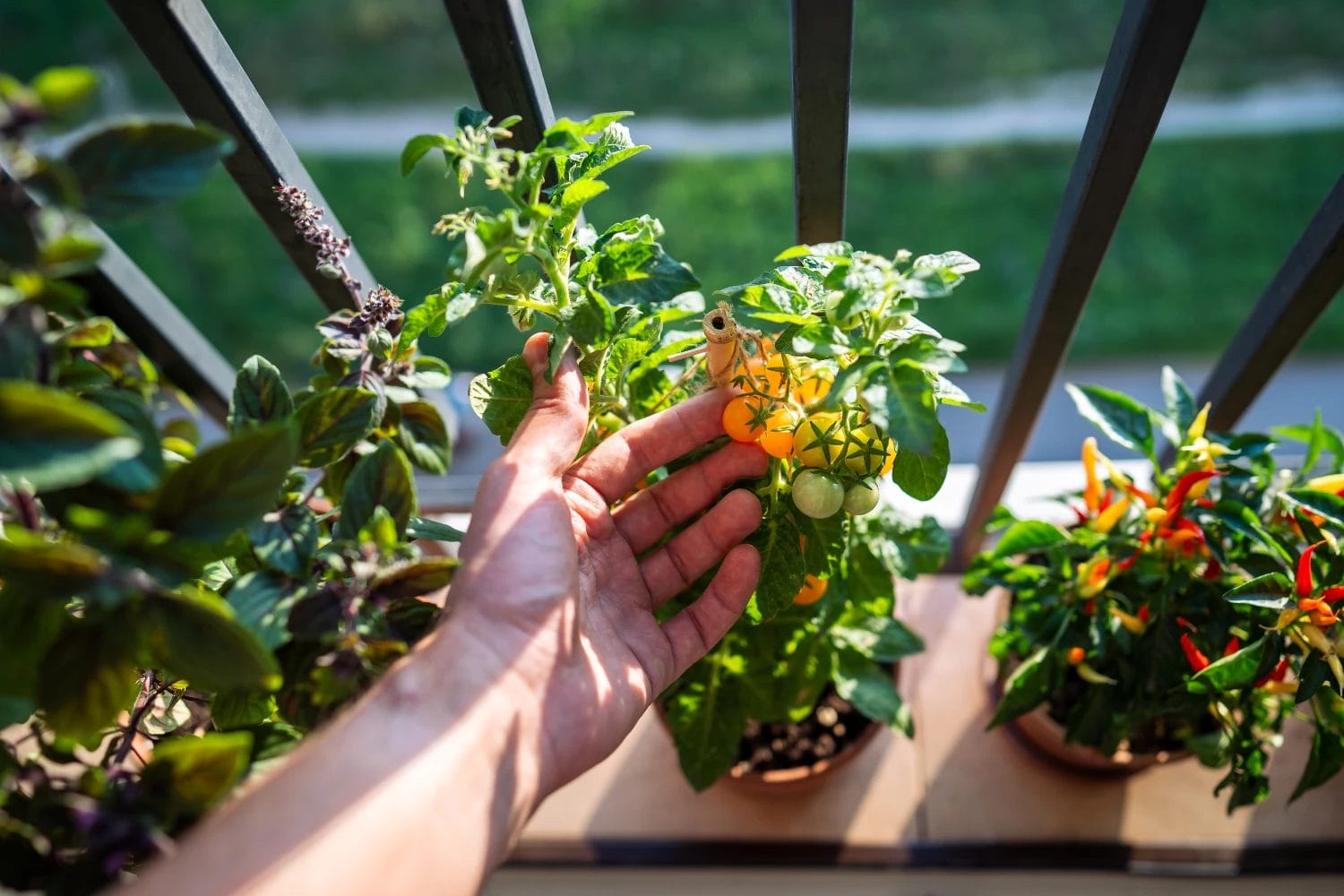
This is not theory. It is a shift in how your home functions.
You step outside and harvest something you grew. Not as a hobby, but as part of how your household operates. You understand how much water your family actually needs and how to store and replenish it intelligently. You make energy decisions with clarity instead of guesswork.
You preserve surplus instead of wasting it. You build systems before you are forced to.
Over time, something changes.
Grocery price spikes create less stress.
Utility instability creates less panic.
Disruptions feel manageable instead of overwhelming.
Confidence does not come from stockpiling.
It comes from capability.
You step outside and harvest something you grew, not as a hobby but as part of how your household operates.
You understand your water needs and replenish intelligently. You evaluate energy decisions with clarity instead of guesswork. You preserve surplus instead of wasting it.
Grocery spikes create less stress. Utility instability creates less panic. Disruptions feel manageable rather than overwhelming.
Confidence does not come from stockpiling.
It comes from capability.
What You Get Inside

Suburban Prepper’s Homestead includes:
- 12.5+ hours of structured video training
- 14 real-world implementation projects
- 3 scalable capability phases
- Downloadable planning tools
You will learn:
- Property assessment and leverage mapping
- Small-space and yard-based food production
- Raised beds and container systems
- Soil building and composting
- Indoor and modular growing systems
- Water capture and storage planning
- Food preservation methods
- Energy literacy and modular backup power
- Property security and operational awareness
- System integration so everything works together
These are not random tutorials.
It is a connected framework that shows you what to build, when to build it, why it matters, and how each system scales as your property becomes more resilient.
You will learn how to assess your property, build food production in small spaces or yards, develop soil and compost systems, implement water capture strategies, preserve food efficiently, evaluate energy options intelligently, and integrate security and resilience overlays so everything works together.
Nothing is random.
You always know what to build next.
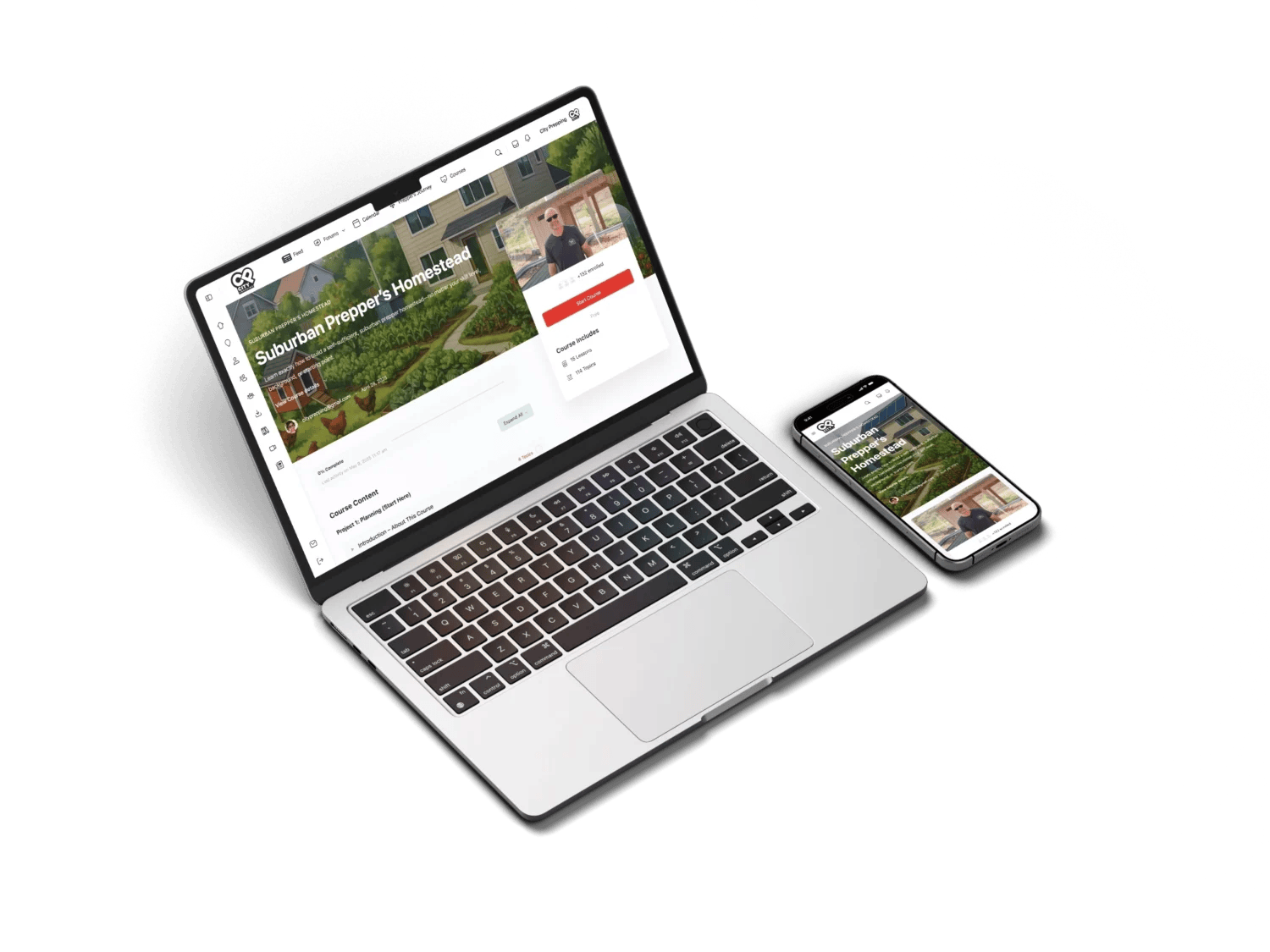
Suburban Prepper’s Homestead
One-time payment of $297 Lifetime access
Lifetime access

Bonuses Included!
Bonus Included: The Family Emergency Binder and Accompanying Course
The Family Emergency Binder & Course
Systems without organization create friction.
When disruption hits, most families do not fail because they lack supplies.
They fail because information is scattered.
Emergency contacts buried in phones.
Medical details incomplete.
Evacuation plans unclear.
Documents hard to access.
Your enrollment includes the full Family Emergency Binder & accompanying course.
You will build:
Physical systems matter. Organizational clarity matters just as much.
When disruption hits, families rarely fail because they lack supplies. They struggle because critical information is scattered.
This bonus course walks you step-by-step through building a centralized household command system that includes emergency contacts, medical information, evacuation plans, document backups, and action checklists.
Two programs.
One integrated resilience system.
- Centralized emergency contact systems
- Organized medical sheets
- Clear evacuation plans
- Secure document backups
- Household inventory tracking
- Communication protocols
- Action checklists
Two full courses: one integrated resilient system.
Who This Is For
This is for you if:
- You want practical resilience without relocating
- You live in an apartment, suburban lot, or modest property
- You want structure instead of scattered upgrades
- You want food, water, and energy systems that integrate
- You want calm capability instead of reactive prepping
This is not for you if:
- You want instant off-grid transformation
- You want theory without implementation
- You believe buying gear replaces building systems
You do not need acres.
You need structure.
You need scalability.
You need sequence.
You need capability.
Hey, I’m Kris!
I’ve been involved with emergency preparedness for nearly 30 years, including humanitarian work in impoverished areas of Mexico and Afghanistan.
From all this exposure I knew how good I had it and also how quickly things can change so I embarked upon a multiyear journey to create my own preparedness plan so I could feel confident taking care of myself and my family here in Southern California.
Over the last several years I’ve been blessed to have more than 1m subscribers on YouTube, and have helped over 3000 students learn more about self-reliance.
This has given me a unique view into how challenging it can be to prepare during these uncertain times.
I created The City Prepping Community to foster a tight-knit community of people that are inspired to become more self-sufficient, safe and secure.
Our goal is to help 10,000 people get prepared by 2030. We call it the 2030 Initiative and would love to have you join us in our mission.
183M Views, 1.24M Subscribers
Suburban Prepper's Homestead
One-time Payment of $297
You Receive:
- 12.5+ hours of structured training
- 14 implementation projects
- 3 scalable phases
- Downloadable frameworks
- Plus, the Family Emergency Binder & Course
This is not buying information.
It is investing in the security of your future. It is investing in structure.
And structure changes how your property performs under pressure.
- Suburban Prepper’s Homestead
- One-time payment of $297
- Lifetime access
- No subscriptions
- You receive the complete training plus the full Family Emergency Binder Course.
This is not an information dump.
It is a tested infrastructure roadmap refined in my yard and designed for yours.
One season from now, you are no longer guessing. You are building deliberately.

30 Day Implementation Guarantee
Enroll.
Go through the training.
Begin implementing the first steps that fit your space and budget.
If, within 30 days, you do not feel clearer and more confident about what to build next, request a refund.
No complicated conditions.
If it does not give you clarity, you get your money back.
Enroll. Go through Phase One. Begin implementing what fits your space and budget.
If within 30 days you do not feel clearer about what to build next, request a refund. No complicated conditions.
If it does not provide clarity and structure, you get your money back.

Who This Fits
This is for suburban and apartment households who want practical resilience without uprooting their lives.
It is not for instant off-grid transformations or gear accumulation without systems.
Prices may climb. Outages may stretch.
Your property can do more.
Sequence over someday.
What Students Are Saying
Frequently Asked Questions
Q. My HOA or city has strict rules about solar, chickens, rain capture, or backyard projects. Can I still benefit from this?
Yes. This course was built for suburban constraints, not fantasy setups. You will see multiple ways to build capability inside the rules you live under, including modular food production, low profile water strategy, practical preservation, and energy literacy that does not depend on installing a full system.
Q. What if my climate or local conditions are not ideal for gardening or certain projects?
You are not locked into one method. The course teaches several flexible approaches you can adapt to your growing season, heat, cold, wind, water limits, capabilities, or poor soil, so you can still build real output even if your environment is not “ideal.” That’s true for all the lessons, and not just the ones on growing your own food. We know ap[artment dwellers probably can’t have chickens or rainwater collection systems or solar setups, but we’re going to show you the basics anyways, so you’re ready to scale how you can, when you can.
Q: I live in an apartment or very small space. Is this still for me?
Yes. The sequence scales down. If all you have is a balcony, a patio, or indoor space, you start there and still build layered capability over time. The goal is not land. The goal is a home that produces and supports you.
Q: I am brand new to this. Will I be overwhelmed?
No. The reason people stall is not motivation. It is lack of structure. This course gives you a clear build order so you always know what to focus on next, and you can move at a pace your life can support.
Q: I want to do this, but my spouse or family is not fully on board. What do I do?
Start small and let the results do the talking. The course is designed to create early wins you can show your household, which tends to build buy in naturally because it feels practical, not extreme.
Q: Could I just piece this together from YouTube or random DIY sources online?
You can find information anywhere, but information is not the problem. The sequence is the problem. This course organizes what matters into a structured roadmap so you stop bouncing between disconnected projects and start building systems that stack.
Q: How is this different from the City Prepping Community?
Suburban Prepper’s Homestead is a build order for turning your home into layered food, water, energy, and preservation capability. The City Prepping Community is an ongoing training, with additional short courses, and the ability to learn alongside others. We have been launching a short course every month over there. They work well together, but this course is the implementation framework for your property.
Q: Will this require a huge investment upfront?
No. You can start with inexpensive, high-leverage steps and scale over time. The entire point is to build capability without wasting money on upgrades that do not connect or do not fit your space.
Q: What if I have physical limitations or health issues?
You can still do this. Projects can be scaled down and adapted, and you will find lower-impact options that avoid heavy lifting while still building real progress.
Q: How quickly can I start seeing results?
Many Phase One projects produce tangible progress quickly, often within weeks, because they are designed to create early momentum. Other systems take longer, but you will always be building forward instead of starting over.
Q: When do I get access to the course and materials?
You get immediate access after purchase. This is self-paced, and you can start implementing right away.
Q: What support do I have if I get stuck?
The course includes structured lessons, checklists, and practical guidance designed to remove guesswork. If you want community feedback and accountability while you build, add City Prepping Community access at checkout or upgrade later. That said, we also have technical support that regularly monitors our sites.